
Sex Offender Checks in Douglas County
Douglas County sex offender records move through two linked government layers. A person who must register reports through the Douglas County Sheriff's Office. The Sheriff collects location and status details, assigns or applies the local risk-notification process, and sends registration data to the Washington State Patrol. WSP maintains the central Washington Sex Offender Public Registry. The public-facing result is therefore a state record built in part from county submissions, not a stand-alone list created by a private search company.
Begin with the public registry when the goal is to search a name, address, city, ZIP Code, or radius. Then read the Douglas County sex-offender information page for the local notice route and Sheriff contact. The two sources answer different parts of the same question. The search interface returns public profiles that meet Washington disclosure rules. The county page explains local notification authority and gives residents a place to direct questions about Douglas County registration or suspected noncompliance.
Search results are not live surveillance. They reflect reported and verified data as processed by government agencies. Match more than a name when reviewing a profile, and note the record's status or update date before using it for a safety plan.
Douglas County Sex Offender Notices
The local starting point is the Sheriff's notification material, which is published under RCW 4.24.550. The official Douglas County notification page shows how the county frames public access and community safety.
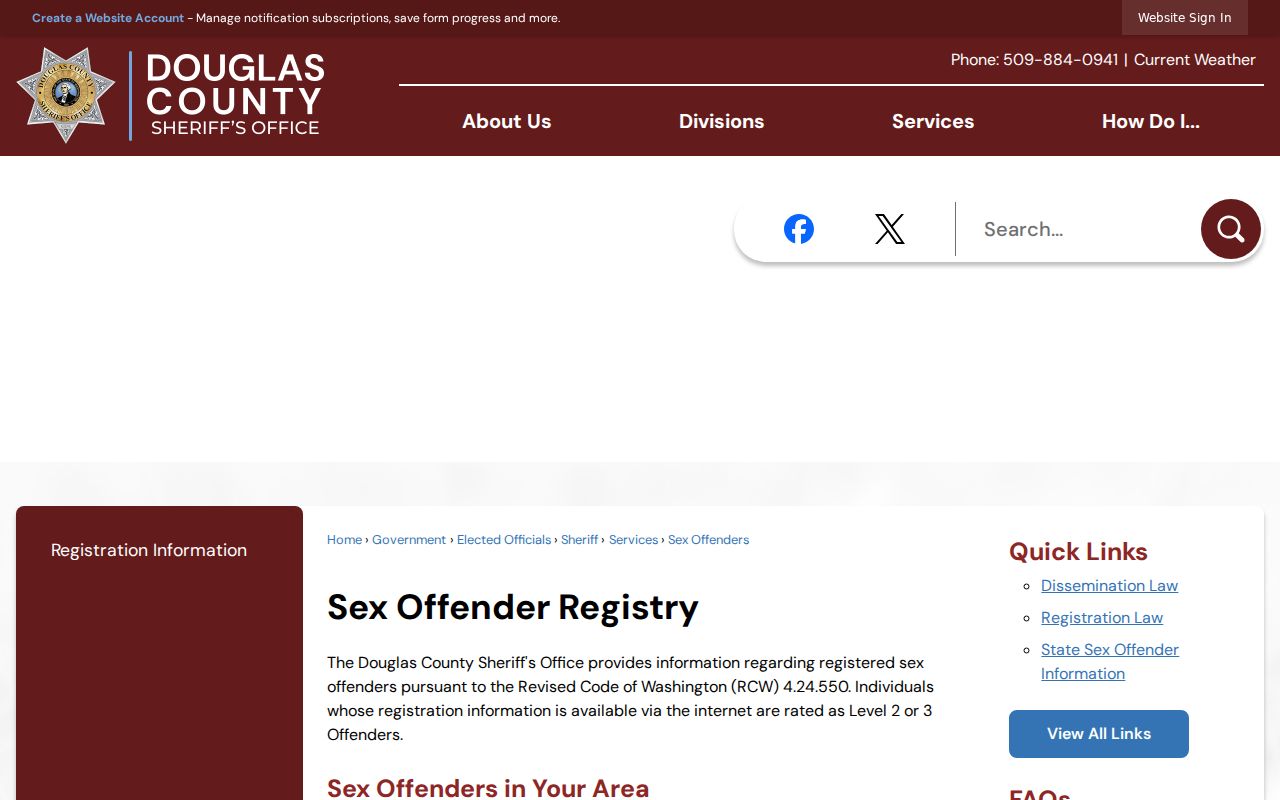
This county source helps a reader separate an official Douglas County notice from a similarly named county page in another state. It also keeps local questions with the agency that takes registrations.
The Sheriff's broader registration information page explains the countywide role, risk classification, and limits on misuse.
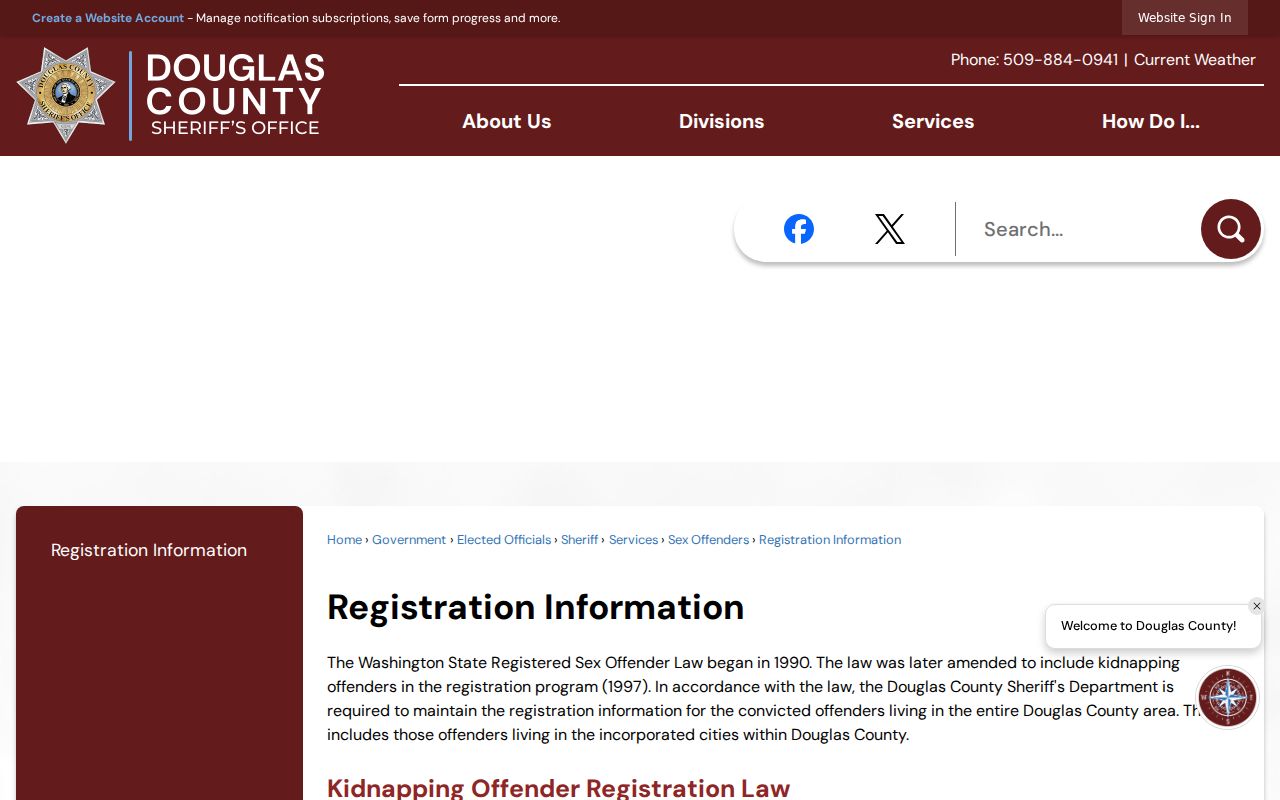
That local guidance matters because the risk label controls the scope of notice, while the duty to register comes from Washington law and the underlying conviction. Douglas County residents should use the Sheriff page for notice context and the public registry for the searchable profile.
How to Search the Washington Sex Offender Public Registry
The public interface supports both person and place searches. Use the least amount of data needed to get a useful result, then narrow carefully. A common surname can create several candidates. An address search depends on accurate city, street, and ZIP data. Radius options may change as the interface is updated, so read the current screen rather than relying on an old set of instructions.
- Open the official public registry route and read its conditions of use before entering a search.
- Enter a first or last name for a person search, or use an address, city, ZIP Code, and radius for a location search.
- Compare the result list by photo, aliases, physical description, jurisdiction, and any displayed status. Do not rely on a name alone.
- Open the full profile, check update or verification details, and use the Douglas County Sheriff contact if the record appears stale or unclear.
The fields documented in the public search support several ways to narrow Douglas County registry results:
| Field Label | Type | Required | Notes |
|---|---|---|---|
| First Name | Text | No | Useful with a surname when identity is known |
| Last Name | Text | No | Common names may return several candidates |
| Address | Text | For address search | Street, city, state, and ZIP accuracy affects the map |
| City | Text or selection | No | Try East Wenatchee, Bridgeport, or Rock Island as appropriate |
| ZIP Code | Text | No | Uses a five-digit ZIP Code |
| Radius | Dropdown | With address search | Use the current live options shown by the registry |
Note: A broad location search can cross city lines, so confirm that a displayed address is actually within Douglas County before drawing conclusions.
Douglas County Registry Map Limits
An address marker is a reported public location, not proof that a person is at that point now. A registrant may have reported a move that has not yet reached the public display, and a profile may show only the level of address detail the law permits. Searchers should read the status and verification fields with the map. Risk level describes a notification assessment. It does not predict that a new offense will occur.
For a search that crosses Washington's border, the U.S. Department of Justice National Sex Offender Public Website provides the official national layer.
NSOPW draws from participating jurisdictions, so it can help when a person or address has ties outside Douglas County. It supplements the county and Washington routes. It does not replace a question to the Douglas County Sheriff about local registration or a possible reporting issue.
Inside a Registry Profile
A public profile combines identity, appearance, location, offense, and registration fields, subject to Washington's disclosure rules. Read the whole profile before deciding whether two records concern the same person. Some details may be limited, and the absence of a field can reflect a publication rule rather than missing agency data. The Douglas County Sheriff may hold registration material that is not all displayed to the public.
| Name and Aliases | Displayed legal name and other reported names that help distinguish similar results. |
|---|---|
| Photo and Description | Photograph plus permitted details such as sex, race, age, height, weight, hair, eyes, scars, marks, or tattoos. |
| Registered Location | Residential area or address at the level Washington law authorizes, sometimes with map or list views. |
| Offense Information | Offense description or statute, conviction jurisdiction, and conviction date when released. |
| Risk Level | Washington Level I, II, or III classification used for community-notification decisions. |
| Status and Updates | Registration jurisdiction, compliance or status indicators, and available update or verification dates. |
| Other Authorized Fields | Vehicle, school, or work information may appear where disclosure is allowed. |
A profile is a public-safety record, not the complete criminal court file. The conviction documents, sentencing terms, and later court orders remain with the court that handled the case.
Douglas County Registration Reporting
Registration begins locally. The Douglas County Sheriff receives the registration or change information, and WSP maintains the central registry. Under WAC 446-20-500, a sheriff must forward registration information to WSP within five working days.
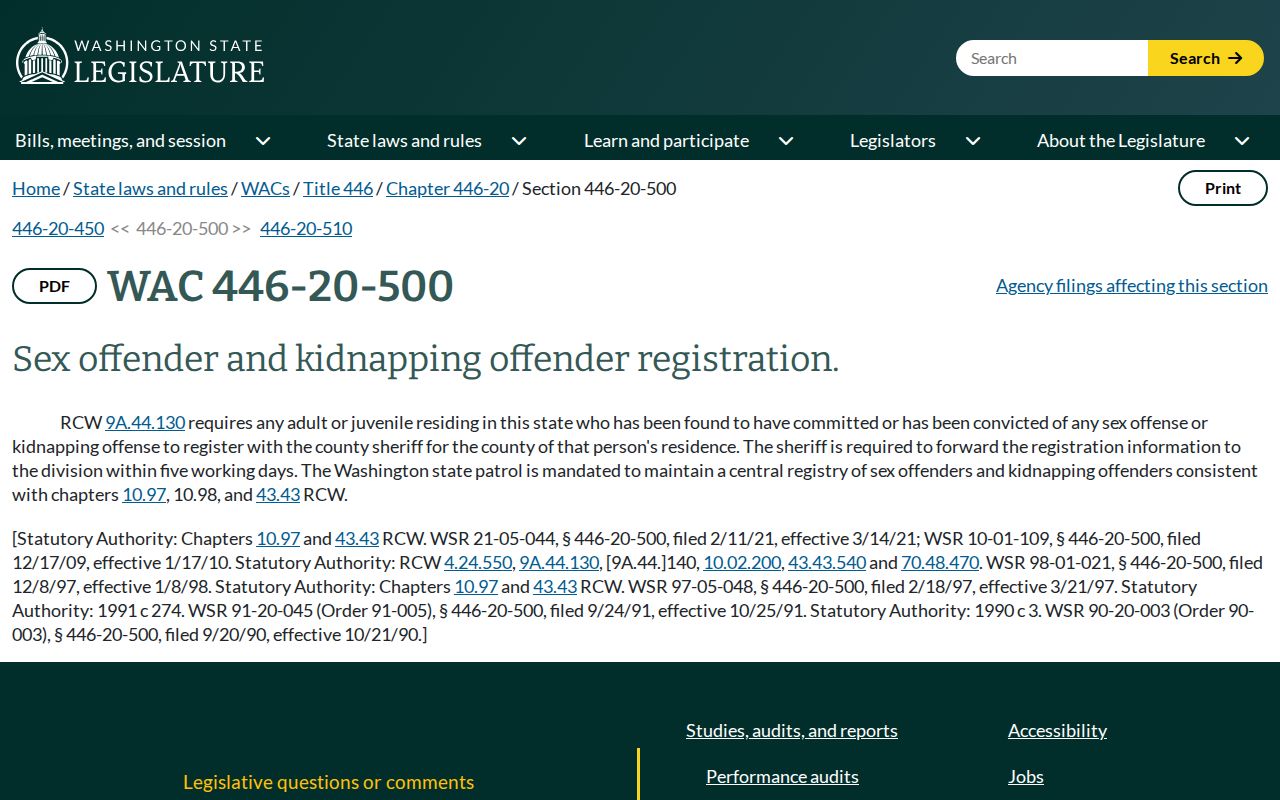
The rule explains why the county and state layers are linked but may not update at the same instant. The practical flow is: registrant reports to Sheriff → Sheriff records and classifies local information → Sheriff forwards data to WSP → WSP updates the central registry → public notice follows applicable law.
Registration duties themselves come from RCW 9A.44.130. That statute governs who must register and covers deadlines tied to residence, school, work, and other status changes. A late public display should be checked with the Sheriff. It should not be treated as proof that the person failed to comply.
Washington Registration Levels and Requirements
Washington's public system uses risk levels for community notification. It should not be replaced with a simple federal SORNA tier chart. Level I carries the narrowest broad public notice, Level II permits wider disclosure, and Level III carries the broadest notification. Duration is a separate legal question based on the conviction, date, governing statute, time in the community, later convictions, and any court-ordered relief.
| Washington Category | Public-Notification Approach | Duration |
|---|---|---|
| Level I | Lowest assessed risk; broad public posting is more limited, subject to law | Depends on conviction, date, statutory duty, and relief rules |
| Level II | Moderate assessed risk; broader community disclosure | Statute-specific under RCW 9A.44.140 and applicable court relief |
| Level III | Highest assessed risk; broadest public notification | Often lengthy or lifetime, depending on offense and law |
Verification and reporting frequency also depend on the legal duty and current circumstances. The public risk label alone is not enough to calculate an end date or every reporting deadline.
Douglas County Registration Duration
A search result does not provide a safe shortcut for calculating how long registration lasts. Start with the offense statute, conviction jurisdiction, conviction date, and the governing version of Washington law. Then account for the registrant's time in the community, any later disqualifying conviction, and any court relief. The controlling source is RCW 9A.44.140.
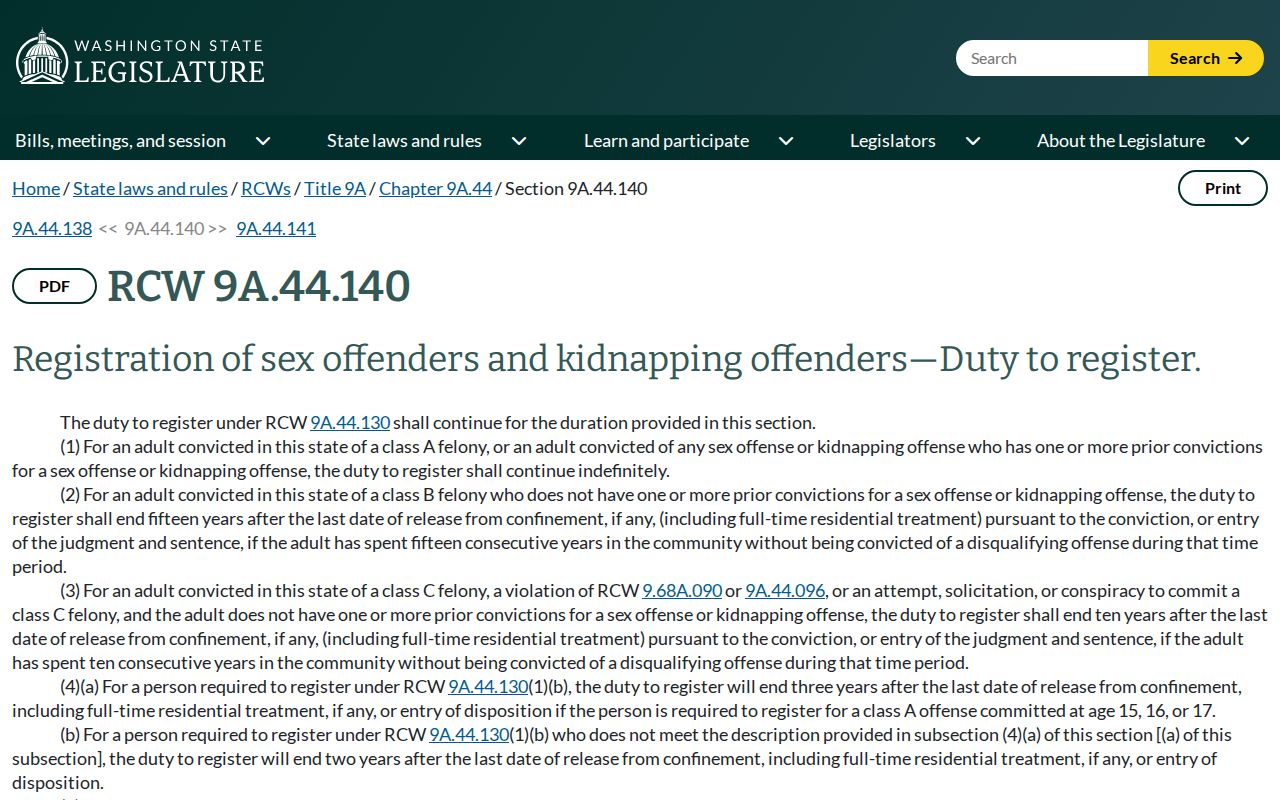
The statute shows why a fixed 10-year, 25-year, or lifetime chart would misstate Washington's system. A person seeking a legal determination about duty or relief should use the conviction record and a court or qualified legal adviser, not infer the answer from a Douglas County map entry.
Report Douglas County Registration Noncompliance
Suspected failure to register belongs with the Douglas County Sheriff's Office at 100 19th Street NW, East Wenatchee, Washington 98802, or 509-884-0941. Give the office the public profile, reported location concern, and the facts observed. Do not confront the person or enter private property. Call 911 only when there is an immediate emergency.
No verified Douglas County registry-alert app was found in the official research. Residents can ask the Sheriff whether email notices or community meetings are currently offered. The lack of an app is not a reason to use an unofficial people-search service. The county page, the Washington public registry, NSOPW, and direct Sheriff contact form the official access chain.
Community Notification and Lawful Use
Washington authorizes public notice based on risk and public-safety need through RCW 4.24.550. The statute defines the community-notification framework used by Douglas County.
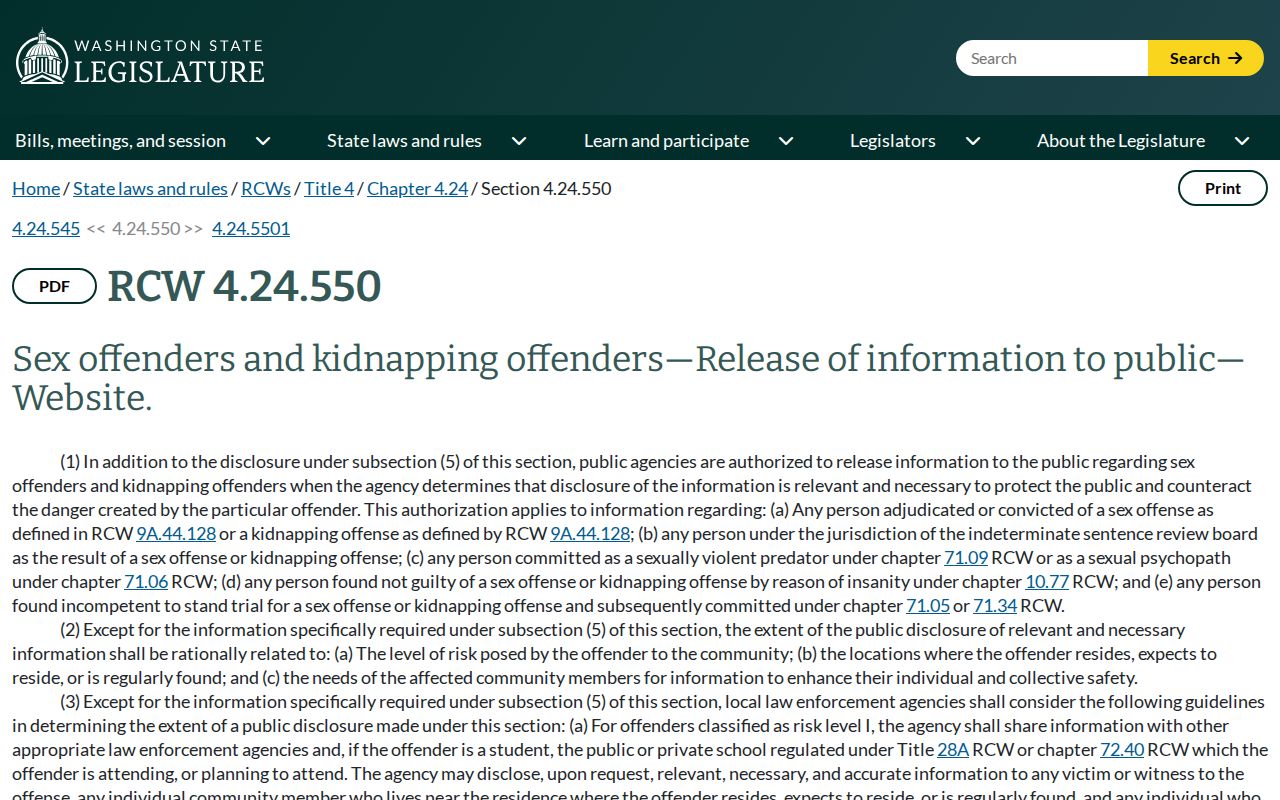
The law supports awareness and sensible safety planning. It does not turn registry data into permission to threaten a registrant, target a household, trespass, damage property, or take vigilante action. Profile information can be incomplete or changed after verification, so material concerns should be reported to the Sheriff for an official check.
Misuse warning: Using Douglas County registry information to harass, threaten, intimidate, retaliate, or commit another offense is unlawful and can be prosecuted as a crime under Washington law; RCW 4.24.550 provides the community-notification framework.
Community notice is one part of a broader safety plan. Use the public information to stay aware, speak with household members in an age-appropriate way, and share suspected reporting problems with law enforcement. Risk level and mapped distance are context, not guarantees about future conduct or a person's current location.